



To choose a mattress, start with how you sleep and what you weigh. Those two facts set the firmness you need, firmness narrows the materials worth looking at, and only then do price and return terms pick the model. For most adults the research points to a medium to medium-firm mattress, about 5 to 7 on the 1 to 10 scales most US brands print. Side sleepers belong toward the softer end of that range, stomach sleepers and heavier back sleepers toward 7 and above.
Start with how you sleep
Think about the position you wake up in, since that is the one you spend the most hours in, and judge every mattress by whether it keeps your spine in a straight line in that position.
Side sleepers put their weight on a shoulder and a hip. The mattress has to let both sink in far enough for the spine to stay level, which is why side sleepers usually do best on medium or slightly softer beds with a thick comfort layer of foam. If the bed is too firm, you wake with a numb arm or a sore hip.
Back sleepers need the opposite balance: enough give for the shoulders, but a firm base under the lower back so the hips do not drop below the line of the spine. Medium-firm is the usual answer.
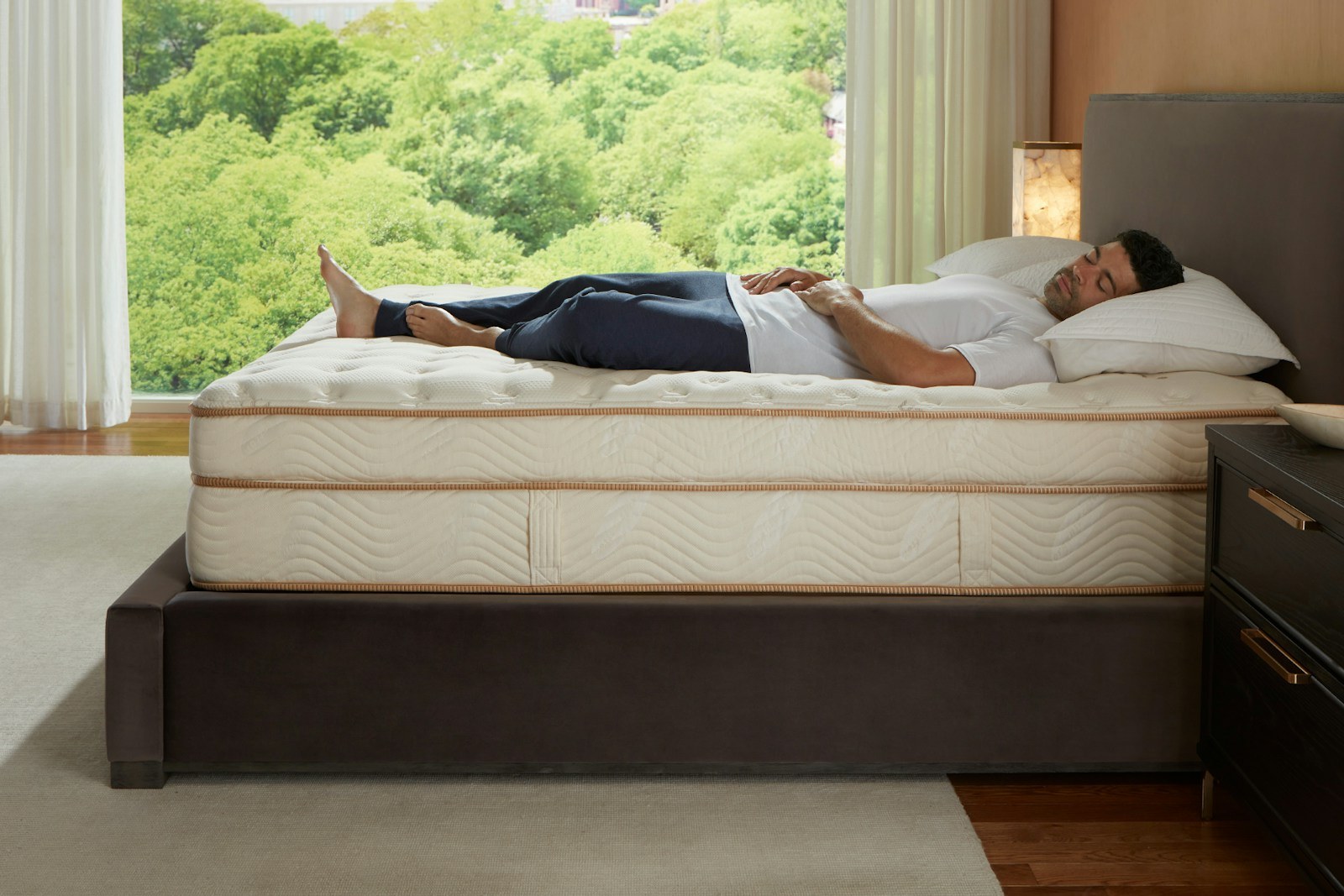
Stomach sleepers have the least room for error. A soft bed lets the hips sink and arches the lower back, so they need a firm surface and a thin comfort layer.
Combination sleepers, who turn over several times a night, should look for a responsive surface that does not trap them in a hollow. Latex and coils make moving easier than dense memory foam.
If you sleep on your side and want to spend less, look at the Zinus Balanced Comfort Signature, the brand’s 12-inch step up from its Green Tea mattress. It is a medium memory foam bed with 2 inches of gel-infused foam on top, and a Queen costs $749. That top layer is thinner than on premium side-sleeper beds, so it suits lighter side sleepers best. Heavier ones should look at the thicker comfort layers in our side sleeper ranking.
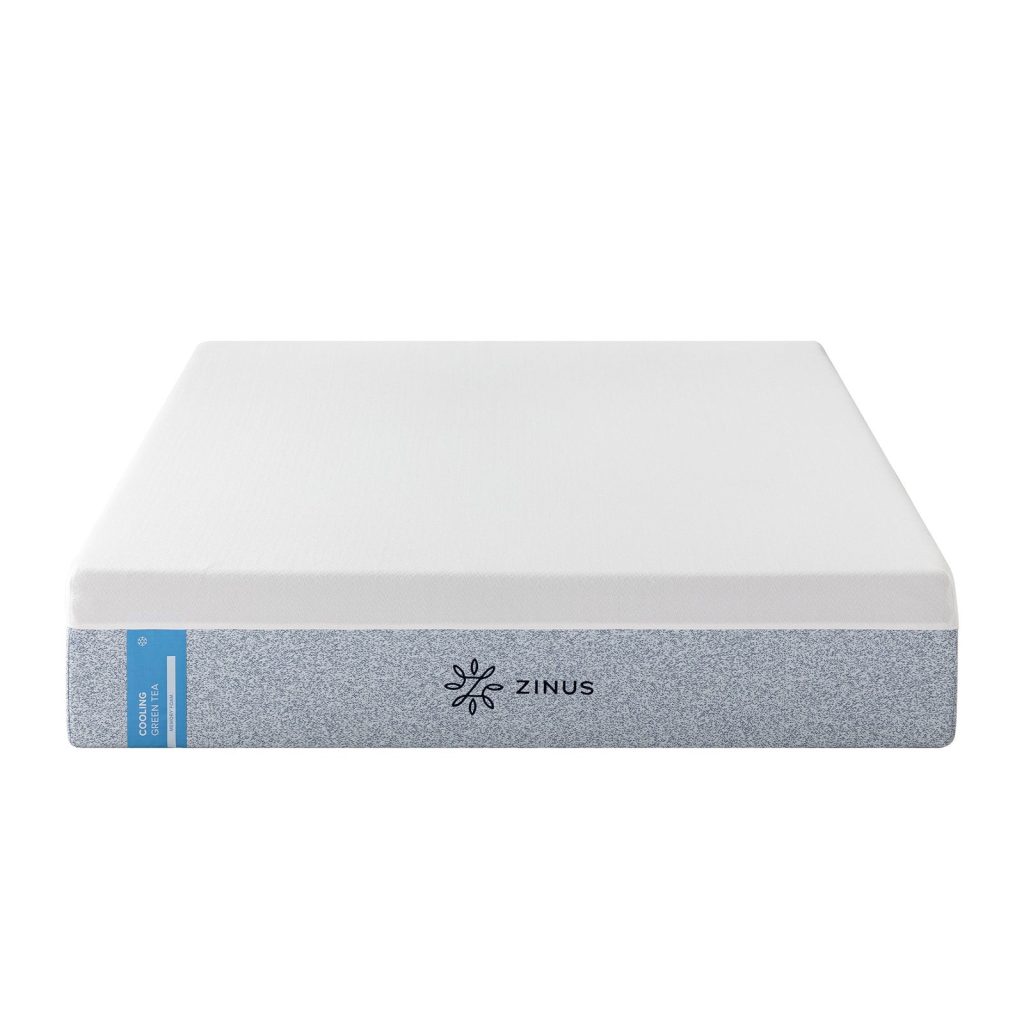
Zinus Balanced Comfort Signature Memory Foam
A 12-inch medium memory foam mattress with a gel top layer, deeper and cooler than the Original Green Tea.
How firm should your mattress be?
Firmness is the part of the decision with the most research behind it. In a Spanish trial published in The Lancet in 2003, 313 adults with chronic low back pain slept on either a firm or a medium-firm mattress for 90 days. The medium-firm group did better on pain in bed, pain on getting up and disability. A 2015 review of 24 controlled trials by physical therapists at Utica College reached a similar conclusion: medium-firm beds, and air beds that sleepers adjust themselves, came out best for comfort, sleep quality and spinal alignment.
No US rule defines the words. As Consumer Reports puts it, one brand’s “medium” might be another brand’s “firm”. Most brands now print a number from 1 to 10, with 10 the firmest, but each brand sets its own scale. The Lancet trial even used a European scale that runs the other way, where 1 is the firmest. Treat any firmness rating as a starting point within that brand’s range and check the feel during the trial.
Body weight moves the target, since a 120-lb side sleeper barely compresses a medium-firm comfort layer, while someone at 250 lb sinks through a soft one to the support core. The chart below is where we would start.
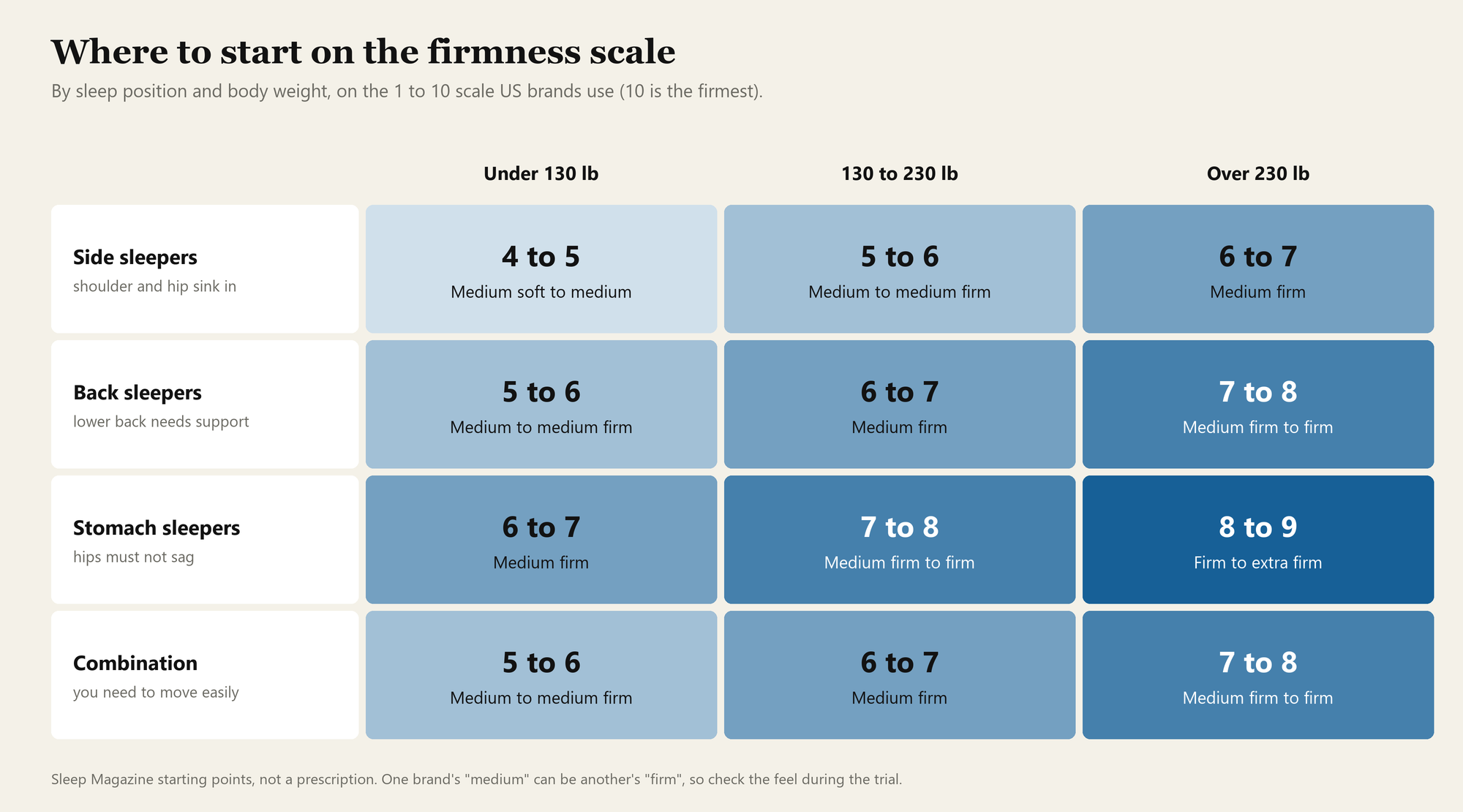
| Sleep position | Under 130 lb | 130 to 230 lb | Over 230 lb |
|---|---|---|---|
| Side | 4 to 5 | 5 to 6 | 6 to 7 |
| Back | 5 to 6 | 6 to 7 | 7 to 8 |
| Stomach | 6 to 7 | 7 to 8 | 8 to 9 |
| Combination | 5 to 6 | 6 to 7 | 7 to 8 |
Heavier sleepers also need sturdier construction, because soft, thin foams compress faster under more weight, and coils carry that weight better than foam alone. Stomach sleepers sit at the firm end of the chart for a different reason: they need a flat surface with very little to sink into. The flattest bed in our back pain ranking is the Brooklyn Bedding Plank Firm, a two-sided foam mattress with a firm side and an extra-firm side over a comfort layer about 2 inches thick, and a Queen costs $1,099.
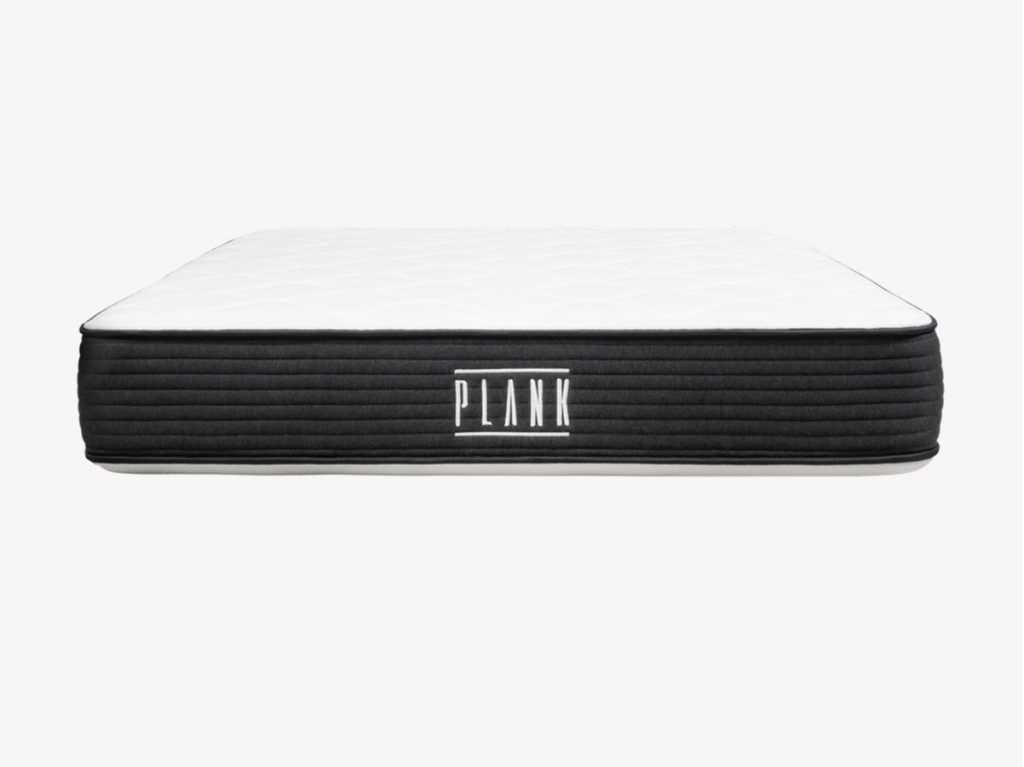
Brooklyn Bedding Plank Firm
A flippable all-foam mattress with a firm side and an extra-firm side, for stomach and back sleepers who want a…
Foam, hybrid, innerspring, latex or air
Once you know the firmness you want, the material decides how that firmness feels. A memory foam bed and a coil bed with the same rating are very different to lie on.
| Type | What is inside | How it feels | Watch out for |
|---|---|---|---|
| Memory foam | Viscoelastic foam over a denser support foam | Slow, hugging sink; partner movement barely travels | Holds heat; harder to change position |
| Hybrid | Foam or latex layers over pocketed coils | Contouring on top, bouncy underneath | Heavier and pricier than all-foam |
| Innerspring | Coils under a thin comfort layer or pillow top | Bouncy, cool, traditional | Less pressure relief for side sleepers |
| Latex | Natural or synthetic latex foam | Springy and buoyant, sleeps cooler than memory foam | Costs more; very heavy to move |
| Adjustable air | Air chambers under a foam layer | Each side sets its own firmness with a remote or app | High price; a pump and parts that can fail |
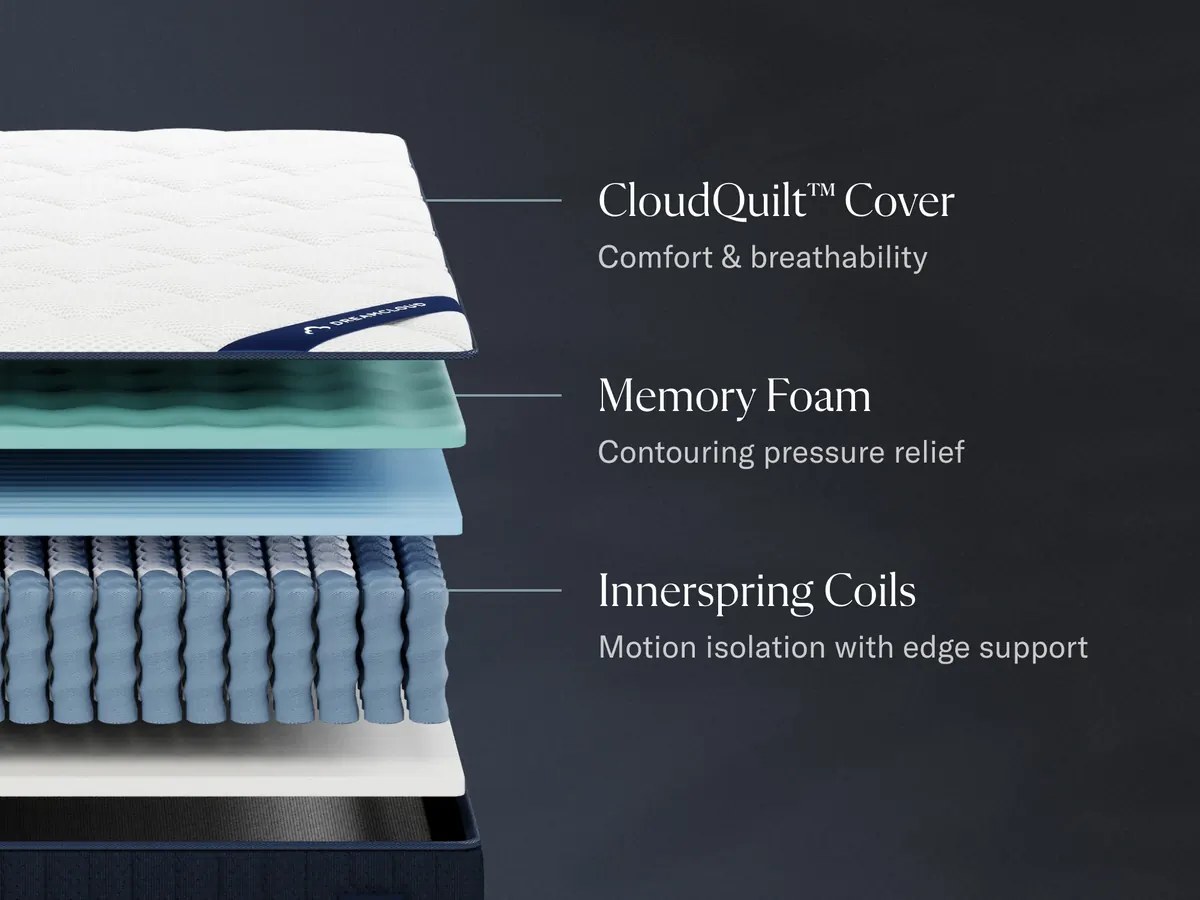
If you are unsure, a hybrid is the safest choice, because the coils add bounce, airflow and edge support to a foam top. Sweetnight sells its CoolNest both ways, as an all-foam bed and as a hybrid, and the coils are what make the hybrid bouncier and cooler. With pocketed coils under a pillow top, it is the version that earned a place in our cooling mattress ranking.
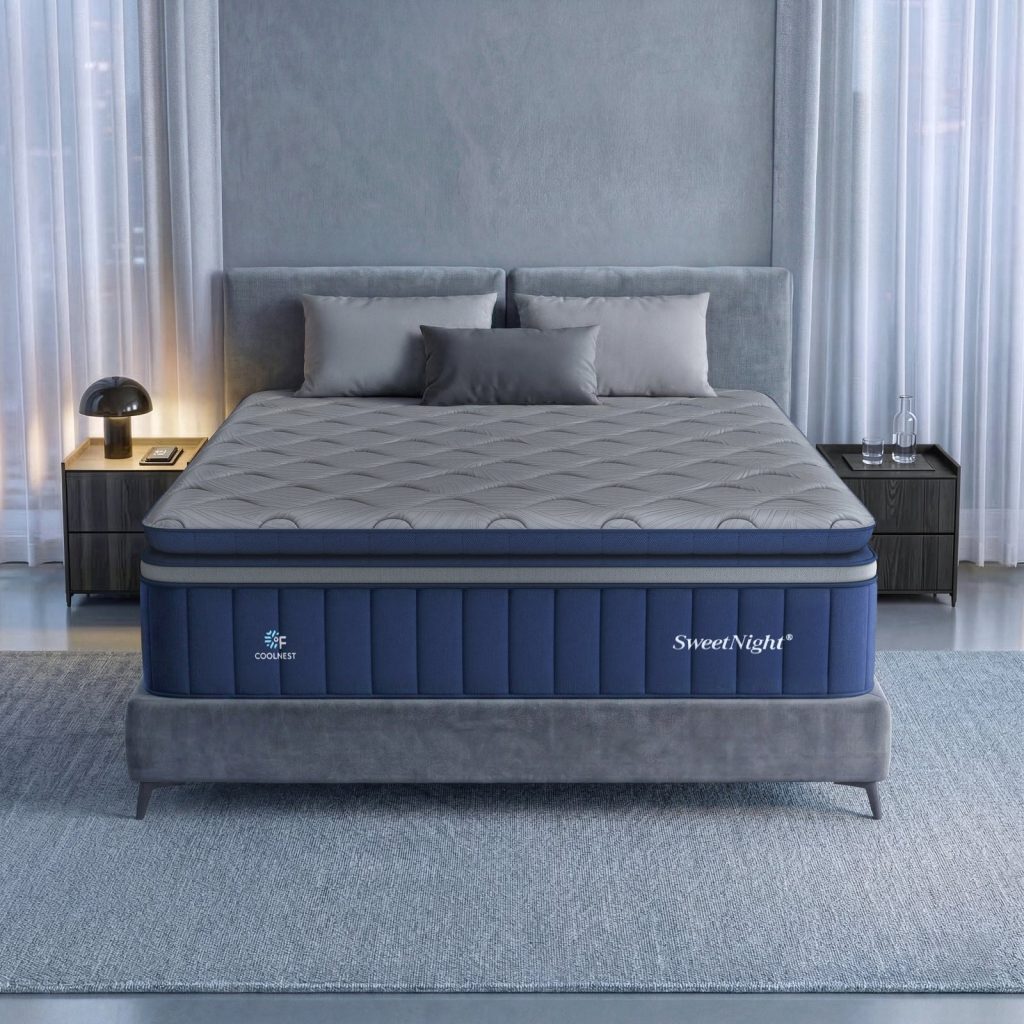
Sweetnight CoolNest Hybrid Mattress
A pillow-top hybrid with 600 pocketed coils and Sweetnight's cooling foams, firmer and bouncier than the all-foam CoolNest.
Two labels matter on any material. Every mattress sold in the US has to pass the federal open-flame and cigarette tests, and cheaper models often meet them with a fiberglass layer under the cover. Poison Control warns that exposure happens when such covers are unzipped or removed, so never take off a cover marked “do not remove”, and look for “fiberglass-free” in the specs if that worries you. For foams, the CertiPUR-US seal means the foam was made without formaldehyde, heavy metals or ozone depleters and emits less than 0.5 parts per million of volatile organic compounds.
What a good mattress costs
More money buys real things up to a point, mainly thicker comfort layers, coils, better edge support and a longer warranty. These are current Queen prices of mattresses we rank.
| Queen budget | What you usually get | Examples we rank |
|---|---|---|
| Under $500 | All-foam beds in a box, a few entry hybrids | Siena Signature 10-inch ($329), Sweetnight CoolNest Hybrid ($499.99) |
| $500 to $1,000 | Well-made foam and hybrid mattresses from the big online brands | Nectar Classic Memory Foam ($699), DreamCloud Classic Hybrid ($699) |
| $1,000 to $2,000 | Thicker foams, zoned support, more premium covers | Nectar Premier Hybrid ($1,199), The Purple Mattress ($1,299) |
| Over $2,000 | Coil-on-coil, latex, Tempur material, luxury pillow tops | Saatva Classic ($1,904), Tempur-Pedic TEMPUR-Adapt ($2,299) |
US list prices are a soft number, because most online brands run sales around Presidents Day, Memorial Day, the Fourth of July, Labor Day and Black Friday, so if you can wait a few weeks, wait for one. Our mattress coupons page lists the codes that work right now, and the best mattresses ranking covers every budget.
Trials, returns and warranties
A home trial is the most useful protection you have, because no store visit tells you how a bed feels after a month. The terms vary more than the advertised number of nights suggests.
Tempur-Pedic, for example, offers a 90-night trial, asks you to sleep on the mattress for at least 30 nights first and charges a $175 return shipping fee. The trial covers only mattresses bought directly from Tempur-Pedic, so one bought at a furniture store follows that store’s policy. Saatva gives 365 nights and deducts a $99 processing fee from the refund. Some physical stores refund only part of the price or give store credit, so ask before you pay how many nights you get, how many you must keep the bed first, what a return costs and who collects the mattress.
Warranties of 10 years are common. In the fine print, check whether the coverage is prorated in later years, how deep a body impression must be before it counts as a defect, and what foundation the brand requires, since some set a maximum gap between platform slats and a frame outside the spec can void the warranty.
How to test a mattress in a store or online
In a store, spend at least 10 minutes on each model you are considering, with a pillow under your head. Lie in the position you sleep in, not the one you sit in. On your back, your spine should feel neutral and your hips and shoulders cradled. On your side, your shoulder and hip should sink in without your waist sagging. Bring your partner, and have them roll over while you lie still to see how much movement reaches you.
Online, the trial is your test. Give the mattress about a month before you judge it, since a new bed and a body used to an old one both need time to adjust. Keep the box until you know whether a return requires it, and measure your room and doorways before you order. Our mattress size chart gives every US size in inches with the floor space each one needs.
Mattress buying questions
How do I know if my mattress is too firm or too soft? The sign of a bed that is too firm is pressure, such as a numb arm, sore shoulders or hips, and tossing to find a comfortable spot. A bed that is too soft leaves you with an aching lower back in the morning and a feeling of climbing out of a hollow.
Do I need a box spring? Usually not. Foam and hybrid mattresses need a solid or closely slatted base, which a platform bed or a foundation (a box spring without the springs) provides. Check the brand’s rules before you reuse an old base.
Is a mattress in a box as good as one from a store? The packaging says nothing about the quality. Many of the best foam and hybrid mattresses ship compressed, while traditional innersprings such as the Saatva Classic arrive flat. A boxed mattress is far easier to get up the stairs, though it can smell for a day or two after unpacking.
When is the best time to buy? During a holiday sale. The largest discounts of the year tend to come around Black Friday, and our Black Friday mattress deals page tracks this year’s offers.
Our verdict
If you sleep on your side, start softer than you think, around 5 on the brand’s scale. Everyone else should start at medium-firm and move firmer with weight, paying for coils above about 230 lb. Couples who cannot agree have two ways out: a split King, which is two Twin XL mattresses side by side with a different firmness on each, or an adjustable air bed. Then pick the model with a trial of at least 90 nights and a return fee you can live with.